Home / Lessons from Agentforce: Can We Make a Clone of You?
July 8, 2026
4 min read
I spent a day at the Agentforce Worldtour stop in Boston last week, and I walked out with a clearer picture of something I had only half believed before. The conversation around AI in the enterprise has shifted, and not in the direction most people expected when this whole wave started.
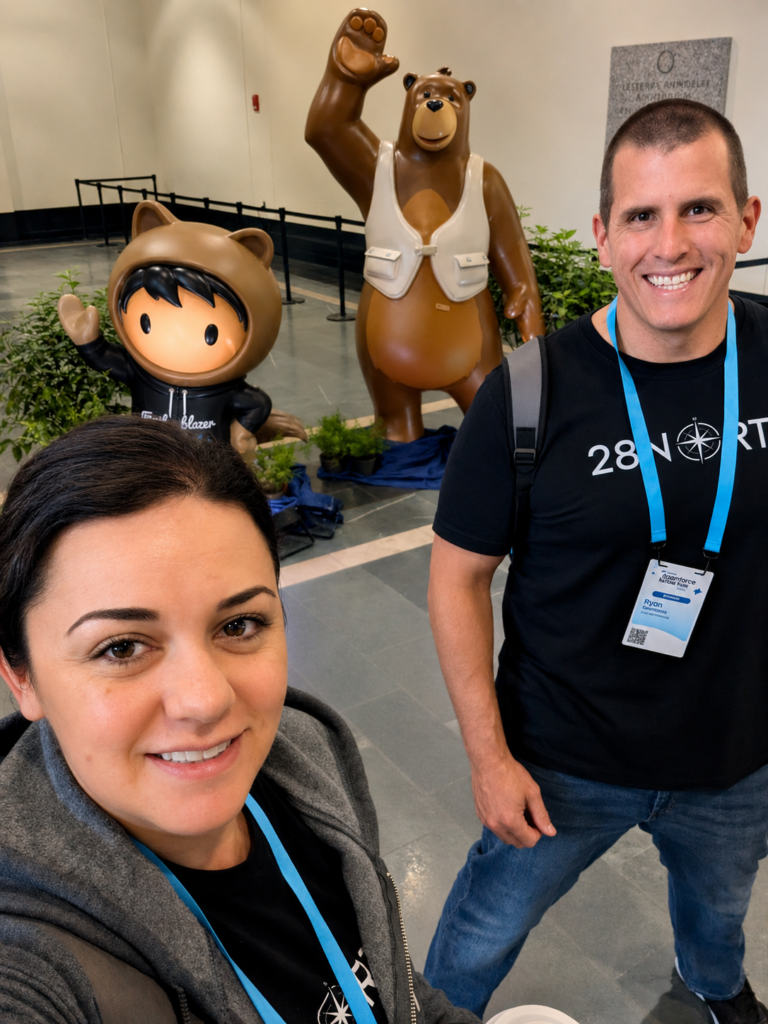
A year ago, every panel and every keynote circled the same anxious question. Will this replace me? Walking the floor in Boston, that question barely came up. What came up instead, over and over, in different sessions and different conversations with people I had never met before that morning, was something closer to this: How do I get more of myself into more places at once?
That distinction matters more than it sounds like it does.
The fear of being replaced makes for a dramatic headline, but it never quite matched how good work actually gets done. The best salespeople, the best operators, the best strategists I have worked with over the years are not valuable because they execute tasks quickly. They are valuable because of judgment built from years of pattern recognition, because of relationships they have spent a decade earning, because of the instinct to know when a deal needs patience and when it needs pressure.
None of that gets replaced by a model, no matter how capable it becomes. What gets replaced, and what should get replaced, is the part of the job that never needed a human in the first place. The status update nobody reads closely. The follow up email that says the same thing every time. The research pass that takes forty minutes and produces the same three findings a sharper person could have predicted going in.
That is the part AI is actually good at clearing out of the way.
Here is the idea from Boston that stuck with me the most, and I have not been able to put it down since.
If you set AI up properly, with the right context, the right guardrails, and the right understanding of how you actually think and operate, it starts to behave like a version of you that scales.
Every leader I know has had someone ask for this at some point, usually phrased as a joke. I wish there were two of me. I wish I could clone myself for this account. I wish someone could just think the way I think and handle the parts I do not have time for. That request used to be impossible. It is not anymore, at least not entirely.
The catch, and there is always a catch, is that this only works if the AI actually has context. Not a generic prompt. Not a tool bolted onto a workflow nobody redesigned. Real context about how decisions get made, what your customers actually care about, what has worked before and what has quietly failed. Without that, you are not cloning yourself. You are just automating the shell of your job and hoping nobody notices the parts that got left out.
The energy in that room in Boston was not fear. It was something closer to relief mixed with urgency. Relief that the conversation has moved past the existential question, and urgency because the companies who figure out how to do this well are going to pull ahead of the ones still debating whether to start.
Riding the wave does not mean throwing AI at every process and hoping for the best. It means doing the unglamorous work first. Documenting how your best people actually think. Building the context layer before you build the automation on top of it. Treating this less like a software rollout and more like teaching a new hire everything you know, except this new hire can work around the clock and never forgets a single thing you taught it.
That is the real opportunity sitting inside everything I heard in Boston this week. Not a tool that replaces you, but a version of you that finally has the bandwidth to be everywhere your business needs you to be.